


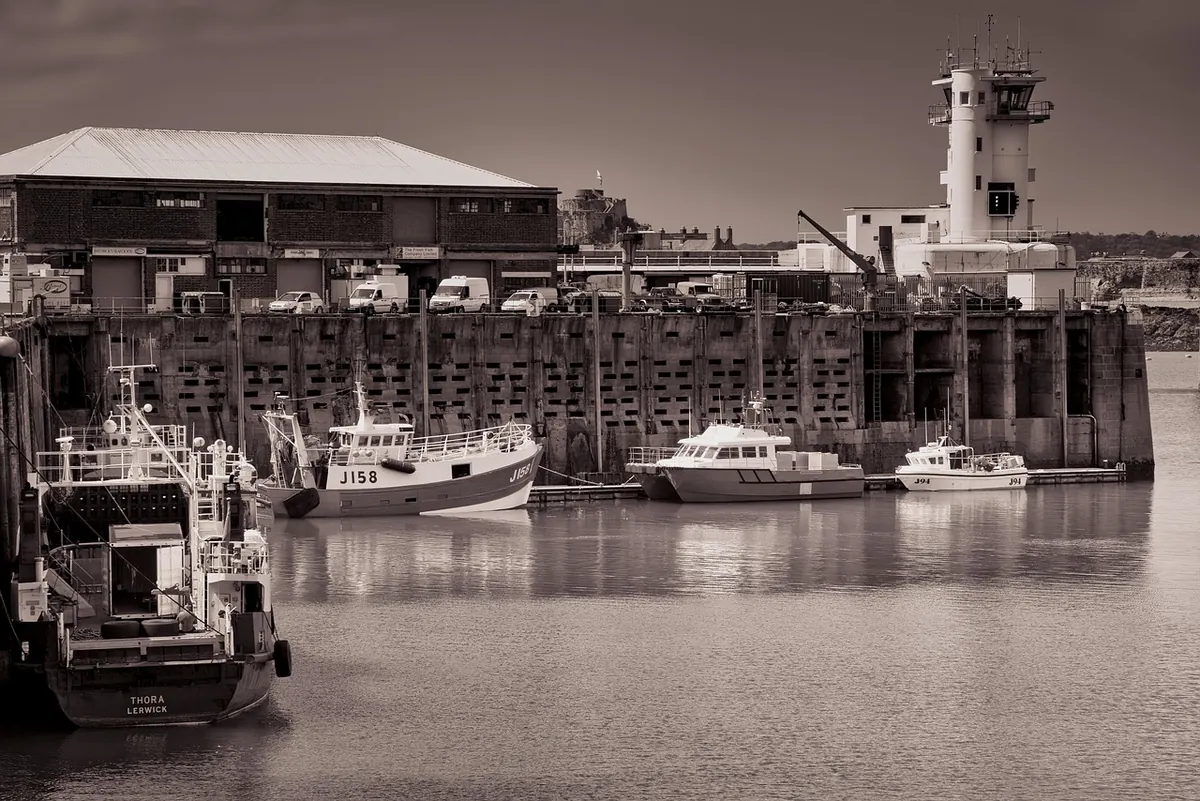

Stand on Whitby's West Cliff at seven in the morning and the town is already working, quietly. Someone is hosing down the pavement outside a café. A boat slides out past the pier. Nobody seems to be hurrying, and nobody is late either. That combination — unhurried but punctual — is what British coastal towns are unusually good at, and it is teachable.
They are not slow because nothing happens. They are slow because the things that do happen answer to forces nobody can argue with: tide, weather, season, the size of the morning's catch. Live alongside that for a few years and your relationship with time changes. Some of it travels inland perfectly well.
The tide keeps the time, not the timetable
On the coast the day has two high points and two low ones, and the clock slides forward by roughly an hour each day. That single fact reorganises everything. Boats leave when there is water. Beaches appear and disappear. The causeways at St Michael's Mount and Lindisfarne are walkable only inside a window, and the window does not negotiate.
Inland, we tend to treat time as a container to be filled. Coastal towns treat it as a condition to be read. The practical difference is small but useful: before deciding what to do, you check what is actually available. Free tide tables, printed at tackle shops and pinned up beside harbour walls, do a job no calendar can.
Weather is the first editor of the day
Anyone who has spent a week on the Northumberland coast knows haar. Anyone raised in Cornwall knows sea fret. Anyone in the west of Scotland knows a soft, persistent drizzle that soaks you without any drama at all. Coastal people do not fight this. They edit around it.
A wet morning does not cancel the day; it reshuffles it. The boat trip moves to tomorrow, the cliff walk becomes a museum, the beach becomes the arcade and a tray of chips eaten under a shelter while the rain comes sideways. There is an honesty in it. The plan was never the point. The day was.
Borrow that and a change of plan stops feeling like a small failure. You check the forecast the way a boat owner does — not to find out whether you will be lucky, but to decide what to wear and where to go.
Waiting is a skill, not a waste
Harbour walls exist so that people can sit on them, and a great deal of coastal life happens there. Fishermen wait for the tide. The fishmonger waits for the boat. The bakery sells out by late morning and shuts, because there is nothing left and no reason to pretend otherwise. Time spent waiting is not time stolen from something more important. It is the thing itself, shared out loud with whoever else is sitting there.
There is a lesson about consumption in this too. When you buy what has been landed, baked or grown nearby, you accept what the day actually produced rather than what you had in mind. The menu is short. The tomatoes are whatever the polytunnel gave. It is a more agreeable way to eat, and often a cheaper one.
The year has a shape, and it is not a straight line
Seaside towns are honest about seasons in a way that office life rarely is. From Easter to October everything runs at once. The rest of the year is for painting, mending, mending again, and sleeping. Shops close in January not from laziness but from arithmetic: there is nobody to serve.
That rhythm points at something most of us build badly. Fallow time. A quiet week placed deliberately at the end of a busy stretch will do more for the next stretch than pushing straight through it ever will. Coastal towns have been running that experiment for generations.
Where to feel it for yourself
- Whitby, North Yorkshire — abbey above, harbour below, and a town that empties and refills with the water.
- Aldeburgh, Suffolk — shingle, beach huts and a high street that closes early and means it.
- Tenby, Pembrokeshire — town walls, several beaches and a harbour that changes character twice a day.
- North Berwick, East Lothian — a small town under a big sky, with a harbour and a law to climb when the weather agrees.
- Filey, North Yorkshire — a proper crescent, a coble landing, and a pace that has never been rushed.
Go out of season if you can. In February you get the town as it is rather than as it performs, which is the version worth learning from.
Five habits worth carrying home
- Read the conditions first. Before you plan a day, check the tide and the forecast. Both are free, and both are more reliable than optimism.
- Buy what the day produced. Choose one thing each week from a market, a bakery or a farm shop and cook around it instead of shopping from a list written in advance.
- Keep one hour unscheduled. Spend it sitting somewhere public — a bench, a wall, a promenade — with nothing to do and no podcast to finish.
- Walk the waterline at low tide. Whatever coast is nearest, the low-water mark shows you a version of a familiar place you have never seen.
- Build in a January. Choose a week each quarter when you produce nothing and fix nothing. Protect it the way a shop protects its closing time.
Start with one, not five
Pick a single item from that list and run it for a fortnight. The tide habit is the easiest to test, because it costs nothing and gives an immediate answer: you either looked it up or you guessed, and the sea will tell you which. The unscheduled hour is the hardest, because it feels like a gap in the day rather than part of it. That discomfort is worth noticing.
If a coastal trip is on the cards, let the place set the plan rather than the other way round. Book somewhere with a harbour, arrive before the shops open, and leave one afternoon entirely free. Take the weather as it comes. If you plan to swim, check local advice on tides and currents and follow it — cold water and fast tides are not things to be casual about.
None of this is complicated, which is rather the point. The sea has been keeping better time than we do for a very long while, twice a day, without ever once being in a rush about it.
Photo: djedj / Pixabay